
Mountain Mover: Sarah Williams

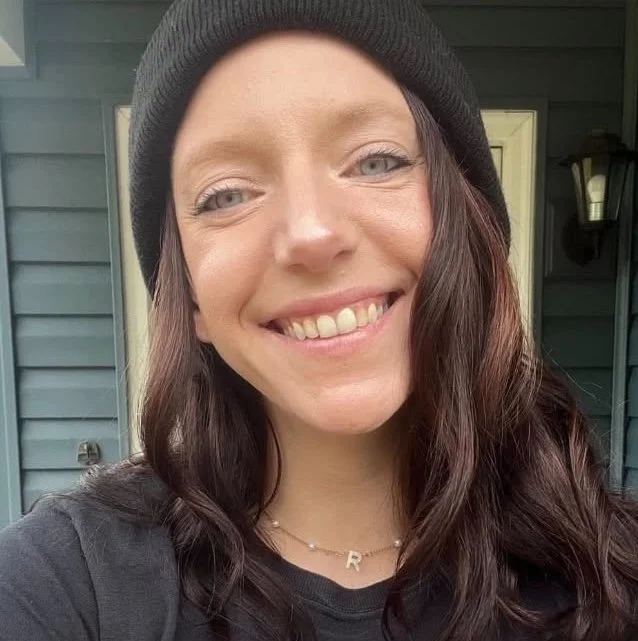
As a registered nurse at a behavioral health center, Sarah Williams has devoted her adult life to treating people struggling with addiction. She has a fierce drive to help others heal.
But just over a decade ago, Sarah sat squarely on the opposite side of the provider-patient relationship.
Active Addiction
Sarah started using drugs young. A moment of giving into peer pressure in her teenage days quickly escalated into an illness that would derail the next several years of her life.
“It got really serious really fast once I graduated high school,” Sarah said.
When her parents would not allow her to use drugs at home, Sarah turned to living on the streets for several months.
Sarah’s circumstances were often determined by whichever man she was seeing at the time. For a while, she stayed in a tent at the skate park and bathed at the Marathon gas station in Elm Grove. She would get an empty sweet tea cup, fill it with water and dump it over herself – “their bathroom had a drain in the floor,” she explained.
At her lowest point, Sarah weighed only 85 pounds and struggled to find a will to live. Narcan had saved her life four different times.
“I was using every day in this cycle of ‘I don't want to wake up in the morning’,” she said. “Using becomes a chore, and you just get tired.”
Then, police raided Sarah’s family home in St. Clairsville. Her arrest was “the best thing that ever happened to her.”
Doing Time
Police found drugs and drug paraphernalia in the home and, because the family lived near St. Clairsville High School, Sarah was charged with trafficking drugs in the vicinity of a school. She was booked and taken to Belmont County Jail.
While Sarah was serving her time, the county allowed her to attend rehab, which her grandpa supported and paid for. Being without access to drugs forced Sarah to get sober – at this point, she felt sobriety was not an active choice.
Oftentimes, people use guilt to try to get addicts to stop using – “just look at how much you’re hurting your family.”
“If I cared about hurting my family, I wouldn't have been doing it. Drugs are more powerful than love. They are. It just is what it is,” Sarah said. “We can't love people clean.”
Sarah started eating regularly again and gained back 30 pounds. It was when her grandpa passed away while she was still in jail that Sarah realized she wanted to stop using.
“You have to reach a point of wanting it, even just a little,” she said. “If you do not have any desire at all to change, you won’t. I'm really grateful that at some point a little bit of desire crept in that was like, ‘hey, maybe I don't have to use drugs.’”
Road to Recovery
Sarah was just 22 years old when she got clean.
“It seems like forever. It's been ten and-a-half years. It's crazy,” she said. “Not many people get clean young, but when I see young people doing well and getting clean and having these beautiful, well-crafted minds from adversity, I just love it so much. I try to fan that flame.”
After leaving jail, Sarah stayed at an Oxford House – a democratically-run recovery home. She began attending regular Narcotics Anonymous meetings and got a sponsor, Kayla, who would end up being one of Sarah’s best friends.
When she found out the Oxford House was closing, Sarah reached out to the YWCA’s WIND (Women Inspired in New Directions) Program Director.
"I messaged her and said, ‘this house is closing out from under me. I'm about to be homeless again.’ And she was like, ‘come here right now.’ I literally went there the next day. It was beautiful,” Sarah said.
After living at the YWCA as a “house mom” of sorts for the WIND program for four years, Sarah decided to move in with her partner at the time, which presented a new set of lessons and challenges.
“I didn't know how to live really,” she said. “I had to learn how to pay bills, how to take care of my body and my mind. I had to learn it all over again.”
Sarah went on to work for two years as a therapist at Miracles Happen, a residential drug and alcohol treatment center in Wheeling. Though Sarah loved social work, she knew she wanted to transition to nursing, but the felony on her record was a barrier. She said she was incredibly lucky to have the resources and support she needed to clear her record.
“After seven years of probation, I applied for an expungement. I got it. And I went to nursing school immediately,” she said.
Helping Others Heal
Having been in school for nearly her entire life, Sarah is counting down the days until graduation. In just under a year, she will be a licensed Psychiatric Nurse Practitioner.
Sarah’s brain always seems to be spinning with ways she could fill support gaps for people in recovery, like mentoring fellow professional students.
“I think when people, especially recovering addicts, didn't do well in high school or have a GED, they struggle [in college]. If they had a mentor to walk them through those first couple years, it could really help them,” she said.
Sarah encourages those struggling with addiction to write down goals for their future, and surround themselves with healthy people that have goals of their own.
“When I was in active addiction, I lacked any goals that proved any type of care for my future because I didn't think I was going to have a future,” she said.
Early in her recovery journey, the concept of being happy was foreign to Sarah. She wrote the goal down on paper. She didn’t really know what happiness felt like, but she knew it was something she wanted to pin down.
Today, Sarah is happy – happy and incredibly busy. She works two jobs, attends classes and sells plants at the Bellaire Farmer’s market.
When she’s not working or studying, self care is crucial – “if we don't take care of our bodies, then we can't expect our minds to follow.” For Sarah, this means going to the gym regularly, eating healthy most of the time and finding restful moments in her apartment, surrounded by hundreds of houseplants.
Sarah also still regularly attends NA meetings and sponsors peers in recovery. Getting to support others, particularly women, as they transform their lives is “the best seat in the house,” Sarah said.
“My one sponsee came in, she was tiny, kind of fragile, quiet, timid. She is such a badass now. She is about to have five years clean next month,” Sarah said. “She was gonna die. And now she has this cute little family, cute little baby, and she's gonna become a nurse practitioner as well.”
Despite her self care routines, Sarah still struggles with burnout, anxiety and insomnia at times. But it’s in the moments when a sponsee or patient expresses even the tiniest inkling of a desire to get better – like Sarah did herself all those years ago – that she finds her inspiration.
“Even at the detox level I work at right now, sometimes I'll be super tired. You know, didn't sleep the night before, and this very newly-in-recovery, still sick, still detoxing, sweating, shaking person is asking me about recovery and actually wants it. If you don't jump on that, you lose it – I'm serious,” Sarah said. “It could be life or death, right? Not to be dramatic, but I just think that's the part that gives me energy, and it doesn't mean I don't get burnt out, I just roll with it because it needs done.”