
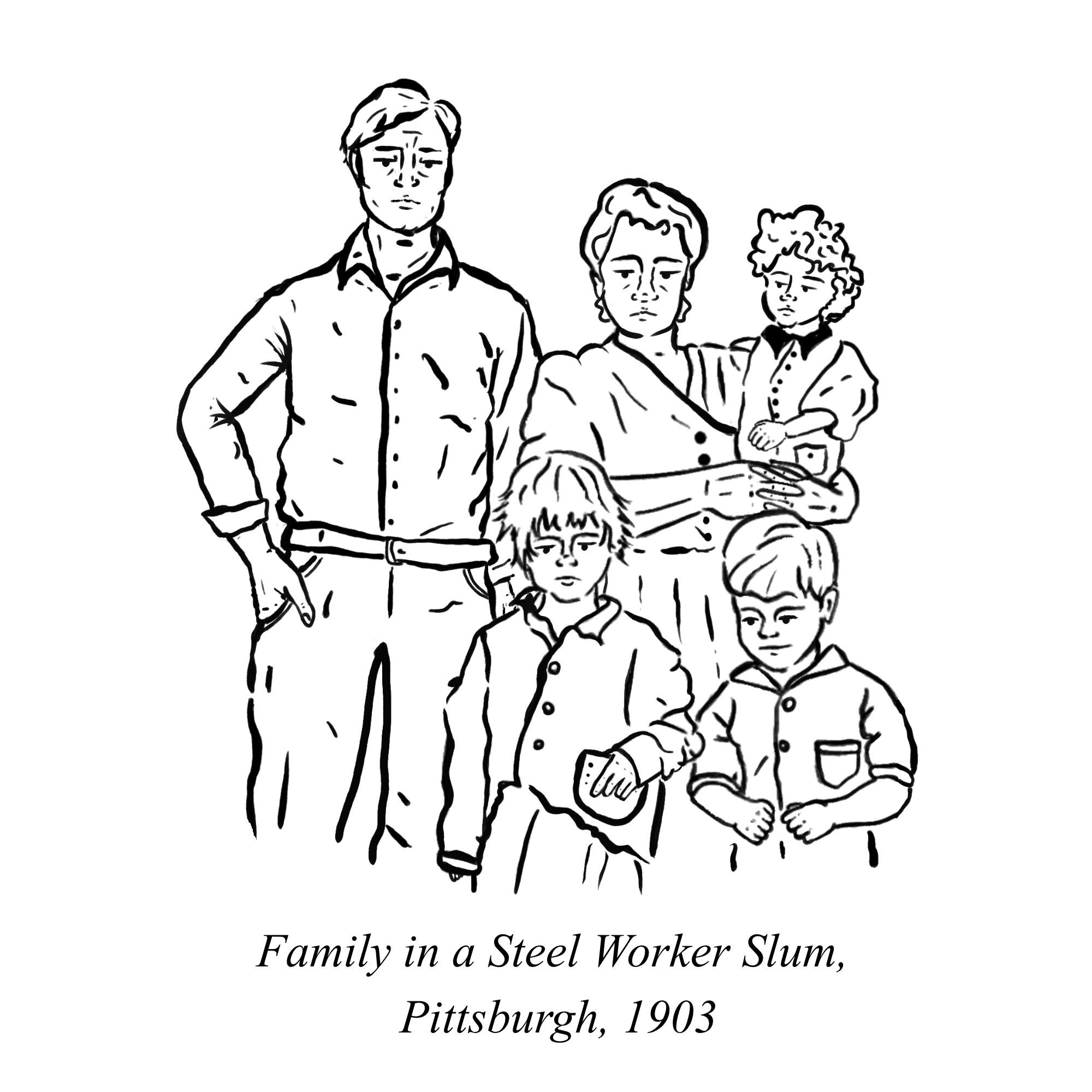
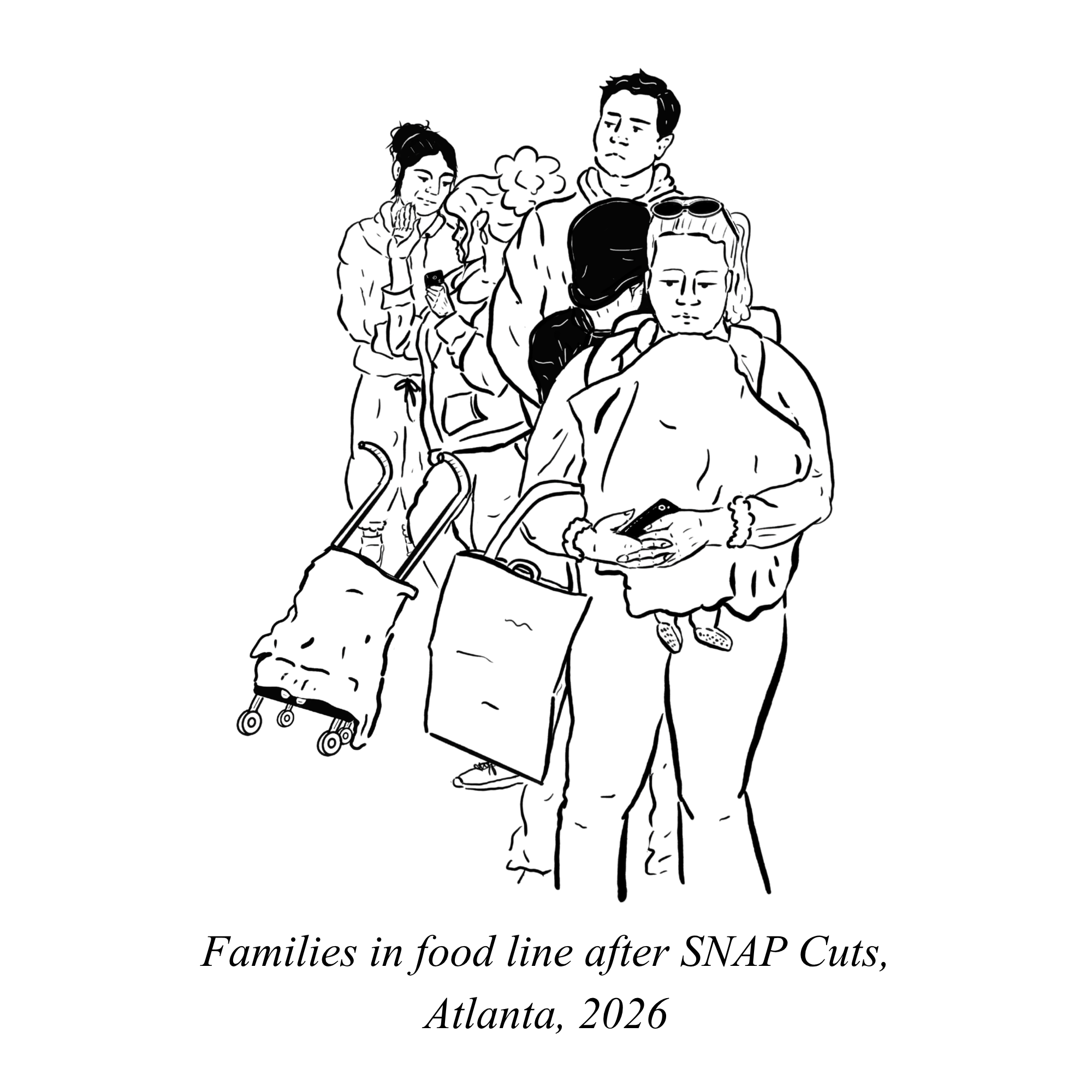
“Dedicated in a lasting commitment to providing charity to the deserving poor.” Reads a plaque above a poor box in the back of an old church in Washington, DC. Countless plaques in countless churches from a certain era around the country and the world bore, and some still bear, a similar message.
“The deserving poor,” now an uncommon phrase, was a prevalent charity-related concept and practice 100 years ago at the turn of the 1900’s. Moving away from a distinction between “the deserving poor” and “the undeserving poor” represents a significant outcome of last century’s treatment of the Social Question, the task of discerning how to respond to modern poverty.
Today however as we re-wrestle with the Social Question, several lost features of the last Gilded Era are beginning to reappear. Among these are not just increased amounts of poverty and anti-homeless sentiment, but also a re-emergence of a supposed distinction between the “deserving” and “undeserving poor.”
The Deserving Poor
Some people are just down on their luck. “Was on the wrong end of downsizing at work.” “Got sick and fell behind with medical debt.” “Took a risk that didn’t pan out.” “Got lost in a glass after the love of their life passed away; but now they’ve turned over a new leaf.” “now, with a little guidance…” “with a little structure...” “this time around…”
And they’re appreciative! “They turned a one time gift into a whole new life.” “Not a hand out, a hand up.” “And look at them now. They are my best worker.” “Three years sober.” “I wouldn’t be here today if it wasn’t for…”
Whatever the particulars, they are hard-working, honest, decent, responsible people that for whatever reason, perhaps by no fault of their own, got behind; and now just need a little help getting back on top again, back to self sufficiency.
Charlie, from the Chocolate Factory. Tiny Tim, from A Christmas Carol. Chris Garner, The Pursuit of Happiness, the Weasleys from Harry Potter.
We give to the deserving poor, and they get better! The next day, a few weeks, maybe a couple months or years later, and you can’t even recognize them. They have a new look, new job, new house, a fresh start; with a smiling picture and story about it.
It feels good to give to the deserving poor. Christians, fellow believers, non-religious alike all do it. It is good to give to the deserving poor.
The Undeserving Poor
Because the fact of the matter is, resources are limited, and we can’t help everyone. “I see we already assisted you before; at least twice it looks like.” “Sorry, these funds are for … mothers of young children; seniors; veterans; people affected by the disaster.”
There are some people who don’t want to help themselves. “Some people just aren’t ready for help.” “Some people are out to take advantage of the system.”
Whatsmore, there are bad people in the world. “No, you can’t use that to buy cigarettes.” “You gambled away how much?” “After what you did to those kids!?” “Don't bother with them, anything they get will end up right in their arm.”
A century ago moral criteria were a routine part of receiving charity, and did the work of weeding out the deserving from the undeserving poor. “Upright women only.” “You’ll need to admit the errors of your ways, repent, and be baptized.” “God helps those who help themselves.” “If any would not work, neither should he eat.”
Today, social media posts say it with pictures. “Went to our once great downtown today, and this is what we saw…” [picture of homeless neighbors]. [Picture of homeless neighbors]: “On the front steps of XXX today.” “Look at this mess. Homeless at it again.”
Then, just as now, rarely do we actually say, “underserving poor.” But said or unsaid the effect is the same. When asked for help, do we help, or not? Do our actions build up, or tear down? Are we looking for reasons to help a neighbor in need, or looking for reasons not to help? Do our words and actions add humanization or further dehumanization to the situation of our neighbors in need?
“Get a job.” “We need to take care of our own.” “They need to go back to where they came from.” “We need to take back our streets.” “Stop enabling the homeless.” “America First.” “Bums.”
It is natural. Understandable. It makes financial sense, political sense. It has even been made to make moral sense. Especially today, when society is so strained and stratified – record wealth, record poverty. Homelessness and drug addiction spilling over into the streets; precisely while we are trying to turn a corner, redevelop, undergo a renaissance. It makes sense to distinguish, in word and action, between the Deserving and Undeserving Poor.
We don’t say it so it still sounds foreign to us, but the very real distinction between the deserving and the undeserving poor is becoming perhaps as popular now as it was 100 years ago during the last Gilded Age when our society was also so strained.
The Poor
Except that, for a country and Western culture whose notion of charity is centered around Christianity, every person needs help. Except that, Jesus helped people. Period. And he instructed his followers to do the same.
It’s not that there weren’t reasons and the same systems that distinguish between the deserving and undeserving poor back then as there are now. There were. And the gospels include several examples of those “undeserving” classes of people. Jesus would have been considered more than justified to not help and just leave alone lepers, prisoners, and the terminally ill, non-Jews, poor people, most any woman without a man (widows, divorce’s, adulterers, prostitutes). And the gospels make specific mention of not just some, but most all of those groups – in greatest hits like the Good Samaritan, the woman with a hemorrhage.
Like today there were well established classes, crimes, moral and social transgressions that more than justified someone having to “fend for themselves,” “sleep in the bed they made,” and no upstanding person would be expected to show concern or lift a finger to help them. Not only were these people considered not worthy of help, back then they weren’t allowed to ask for help!
But, the gospels not only do mention these “undeserving” groups and individuals; and, the gospels are clear that these people not only had the audacity to ask Jesus for help, but what's more, in response Jesus consistently does the unthinkable, and helps them!
But as they do in every age, the gospels required keen spiritual leaders to properly discern their meaning in the new context of “the Social Question.” At the turn of the 1900’s that even meant going against our established Christian institutions with well-intentioned charitable policies and plaques dedicated to serving “the deserving poor.”
Early at the turn of the 20th Century G. K. Chesterton helped us wrestle with the question of the Deserving and Underserving Poor. In an essay specifically on the topic that he published in Heretics, Chesterton notes that charity cannot only go towards those who we desire to help, the deserving poor. He goes as far as to identify that such works are in fact not properly Christian charity, but rather a kind of self serving altruism.
A generation or so later while we were still wrestling with the Social Question, one of Dorothy Day’s most lasting quotes makes the point directly.
“The Gospel takes away our right forever, to discriminate between the deserving and the undeserving poor.”
This distinction was prominent during the early 1900’s when Dorothy Day was becoming aware. And so prominent and needed was this counter-cultural gospel conviction that it became a cornerstone to the Catholic Worker Movement she founded, the Catholic Worker Movement that disrupted Christian, nonchristian, and secular charities forever.
Be it because of Day, or Chesterton, Jesus or the contribution of any number of good-hearted people, in the second half of the 20th century the “deserving poor” slowly left not just our social service vocabulary, but our charitable process and collective memory as well.
When someone is in need, especially if they ask you for it, you help them.
That is challenging. Especially when we already helped them before. When they aren’t appreciative. When a few weeks, a month, a year later, they still need help. When there is no smiling picture to prove that our charity worked.
We like stories where someone gets better. And we should. But what happens to our concern when they don’t? Does someone become undeserving because their life hasn’t become the story we hoped to tell?
Help doesn’t always mean money, or even necessarily a material resource at all. It might mean listening long enough to just hear what someone is asking for. It might mean helping someone get connected to resources. It might mean being present with someone, especially during the lowest, most difficult time of their life. We have limited resources, and sometimes we cannot provide what is needed. But there is a difference between saying “I cannot give you this” and saying “You are not worth helping.”
We still have to discern how to help. That takes patience, judgment, and sometimes more help than any one of us can give. But a person’s dignity cannot depend on whether we approve of their life, or whether they make good use of what we offer.
Let us look at ourselves as we wrestle with the Social Question again today. Especially those of us who are Christians. We ask for forgiveness, for another chance, for help with troubles we sometimes had a hand in making. And we hope, even profess, that when we need help, someone will still be there to help us, whether we deserve it, or not.
Can we extend that same concern to the person whose troubles are more visible? Whose choices are harder for us to understand? Who is still standing outside the church after the poor box has been emptied?
A century later, we are still wrestling with what to do about all these poor people, still wrestling with the Social Question. Jesus, Chesterton, and Day challenge us to look again at the person asking for help, and look at ourselves.
We may not be leaving plaques in the backs of our churches with the phrase “deserving poor,” but we are very much leaving lasting marks that future generations will observe and question - marks on our communities, our laws, on our neighbors. Are the marks we're leaving saying there is one kind of person who is worth helping and another kind of person who is not; or, are we saying that we, all of us, both need and deserve each other's help?